

Why Hire a Real Estate Coach?

The Crucial Role of a Coach for Real Estate Agents


In the competitive world of real estate, success hinges not only on market knowledge and networking skills but also on personal development and continuous improvement. To achieve long-term success and maximize their potential, real estate agents benefit greatly from having a coach. A coach serves as a guiding light, a source of motivation, and a strategic partner, offering invaluable insights that can lead to heightened achievements and enhanced career satisfaction.


    1. Personalized Guidance: A coach provides personalized guidance tailored to an agent’s strengths, weaknesses, and unique goals. They assess the agent’s current performance, identify areas for improvement, and develop a customized plan to achieve specific milestones. With a clear roadmap, the agent can navigate the complex real estate landscape with more confidence and efficiency.
    2. Overcoming Challenges: Real estate can be unpredictable and demanding, often presenting agents with challenging situations. A coach acts as a reliable sounding board, offering experienced perspectives to tackle obstacles and find creative solutions. Their mentorship can instill resilience and problem-solving skills, enabling agents to adapt swiftly and effectively to changing market conditions.
    3. Accountability and Motivation: The journey of a real estate agent can be solitary at times, making it easy to lose focus or feel demotivated. A coach provides the necessary accountability and motivation to stay on track with business plans and professional growth. Regular check-ins and feedback sessions ensure that agents stay committed to their goals, fostering a sense of responsibility and determination.
    4. Enhanced Skills and Knowledge: In an ever-evolving industry, staying up-to-date with the latest trends and best practices is vital. A skilled coach can share industry insights, advanced marketing strategies, and negotiation techniques that empower agents to excel in their roles. Continuously improving skills lead to increased confidence and credibility, attracting more clients and generating more business.
    5. Confidence Building: Confidence is the foundation of success in real estate. A coach helps agents build self-assurance by recognizing and building upon their strengths. They also aid in overcoming self-doubt and fear of failure, allowing agents to take bold steps, explore new opportunities, and expand their horizons/
    6. Networking and Connections: Coaches often have extensive networks within the real estate industry. Leveraging these connections, agents can gain access to valuable resources, potential clients, and collaborative opportunities. A coach can facilitate introductions, mentor-agent meetups, and industry events, accelerating the agent’s professional growth.
    7. Balancing Work and Life: The demanding nature of a real estate career can sometimes lead to burnout. A coach can help agents strike a balance between work and personal life, ensuring they stay energized and enthusiastic about their profession. This balance not only enhances well-being but also fosters long-term sustainability in the business.

How the NAR Settlement Regulatory Reforms instigated are affecting the Real Estate Industry

The recent settlement between the National Association of Realtors (NAR) and several plaintiffs has significantly impacted the real estate industry, particularly in the United States. The key reforms, which took effect on August 17, 2024, aim to increase transparency and reduce potential conflicts of interest.


Here are some of the key changes and their potential implications:

1. Compensation Changes:


No Mandatory Buyer Agent Commissions on MLS: One of the most significant changes is the prohibition of listing brokers or sellers offering commission to buyer agents on Multiple Listing Services (MLS). This means that sellers are no longer obligated to pay a commission to a buyer’s agent, giving them more control over their costs.

Shifting Compensation Models: This change may lead to alternative compensation models, such as flat fees, hourly rates, or performance-based fees, potentially reducing the traditional commission-based system.


2. Buyer Representation Agreements:


Increased Importance of Written Agreements: The settlement encourages the use of written buyer representation agreements, which outline the services provided by the agent and the terms of compensation. This shift aims to enhance transparency and clarity for buyers.


3. Communication Changes:


Restrictions on MLS Communication: The settlement places restrictions on how and where real estate professionals can communicate about offers of compensation. This change may impact how brokers and agents collaborate and negotiate deals.

Potential Impacts on the Real Estate Industry:

Increased Competition: The reduced reliance on traditional commission structures may lead to increased competition among agents, potentially driving down costs for sellers and buyers.

Shifting Agent Roles: Agents may need to adapt to changing compensation models and focus on providing value-added services to differentiate themselves in the market.

Consumer Empowerment: The increased transparency and flexibility in compensation models may empower consumers to make more informed decisions about real estate transactions.

In Conclusion:

The NAR settlement has ushered in a new era of transparency and flexibility in the real estate industry. While the full impact of these changes is yet to be seen, it is likely to reshape the way real estate transactions are conducted in the United States.

DISC Assessment

THE 4 DISC BEHAVIORAL STYLES


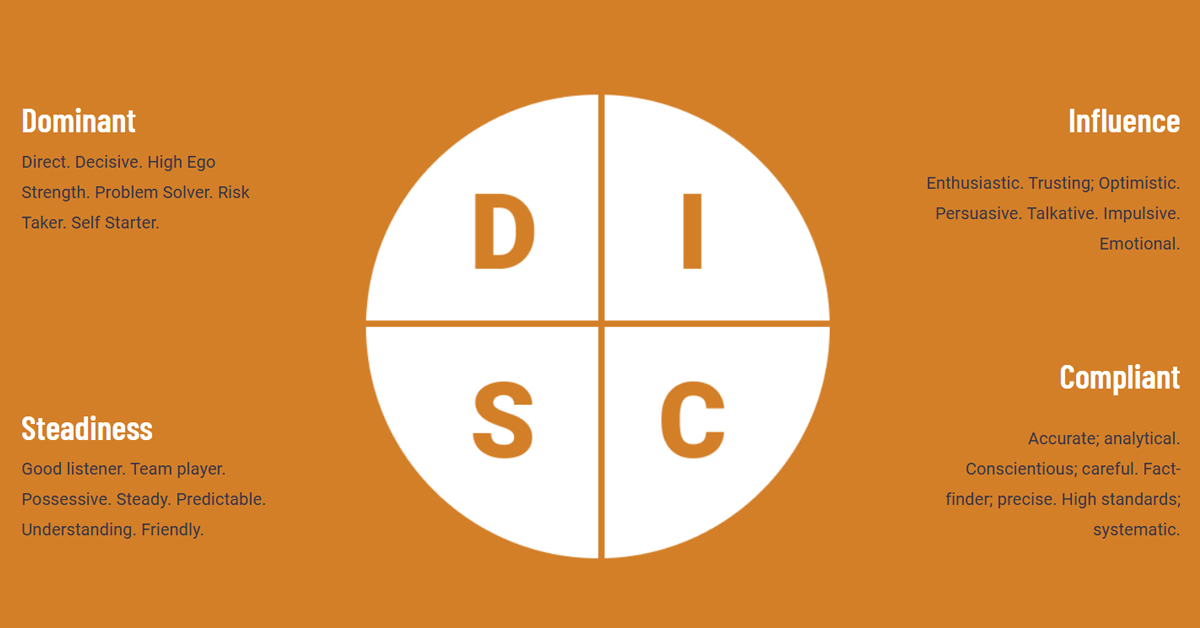
The DISC is one of the most prolific behavioral assessments used in the business world today. As seen in the image above, an individual’s DISC profile is composed of a combination of 4 behavioral styles:  D (dominance), I (influence), S (steadiness) and C (compliance). 


DISC is a tool that enables you to better understand yourself and others. Use it to help make career choices, improve relationships, and understand personal patterns. DISC theory is researched by Dr. William Moulton Marston at Harvard University in order to identify predictable actions and personality traits within human behavior. Marston narrowed these predictable personality traits into four DISC personality types: Dominance, Steadiness, Influence, and Compliance.